The Way We Measure Student Attendance Has Changed, But Will it Help Address NYC’s Abysmal Chronic Absentee Rate?

A look back at student chronic absentee rates in New York City’s public schools.
By Sophie Holin
May 7, 2026
Skipping school has far reaching implications on the rest of a student’s life, not only on academic success, but also on social networks, career trajectory and opportunities, emotional, behavioral, and physical health, and safety. Data shows that there are a plethora of factors contributing to notoriously high absenteeism rates in New York City public schools, implying that there may be no silver bullet solution.
New York City’s student chronic absenteeism rate is consistently above the national average, though not an outlier among large U.S. cities. Like everywhere else, the Covid-19 pandemic was a shock to the public school system in New York City, dramatically spiking rates of chronic absenteeism. Despite desperate national and local initiatives, rates have continued to increase even above pre-Covid levels to the point where chronic absenteeism is considered an epidemic.
Glossary of Terms, click here for more information.
| Glossary |
|---|
| Chronic absence: in New York is defined as missing 10% of school days — typically 18 days — in one school year. New York state does not count days in which students were suspended or on long-term medical leave, because in both cases, districts are supposed to provide educational services at home. Chronic absenteeism is the key metric used by researchers and policymakers. Truancy: more specifically refers to unexcused absences, while chronic absenteeism counts all absences regardless of reason. STH: Students in Temporary Housing describes students experiencing housing instability, including doubled-up living arrangements where a family lives with a relative or another person because of financial hardship, or it can mean living in a shelter. ELL: English Language Learners, data in this report does not include Pre-K students since the New York State Education Department only begins administering assessments to be identified as an ELL in Kindergarten. SWD: Students With Disabilities, refers broadly to students who receive special education services. Data in this report does not include Pre-K students since Pre-K students are screened for IEPs only at the parents’ request. |
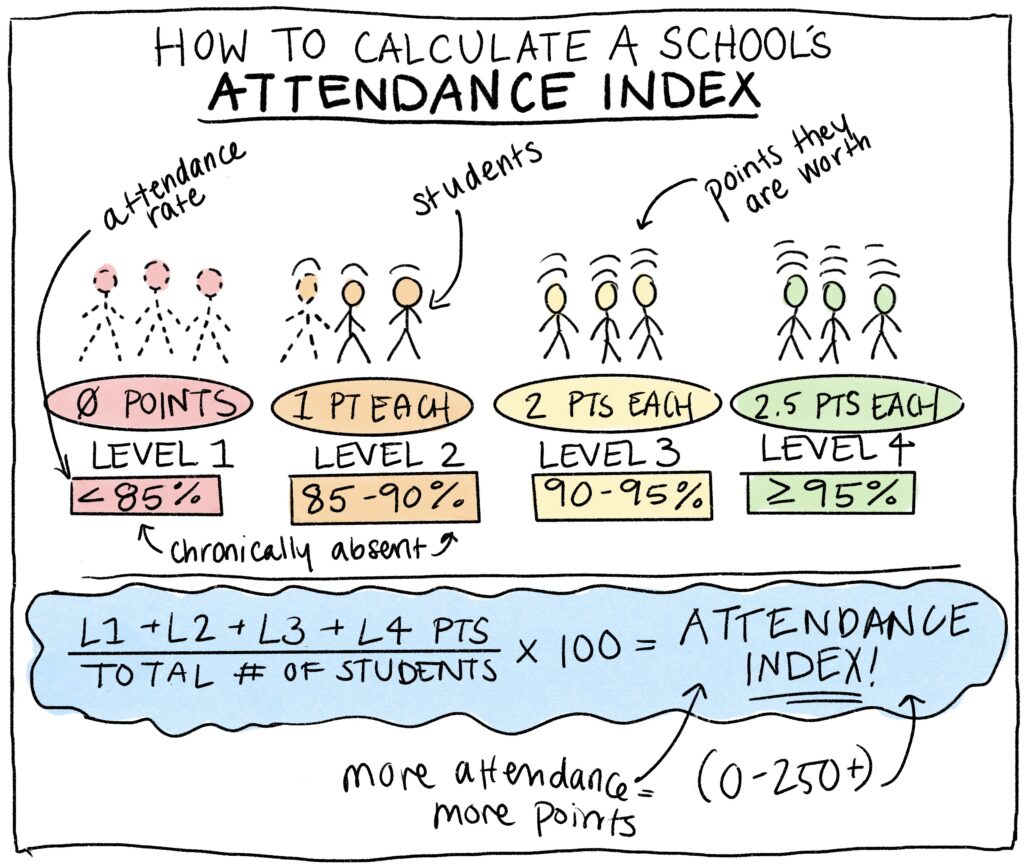
Against this backdrop, the New York State Education Department (SED) has implemented a new way for schools to measure attendance beginning this 2025-26 school year. Scrapping the chronic absentee rate as a metric for ‘grading’ schools’ progress, the department is implementing the Attendance Index. The goal is to move from labeling students to engaging them, recognizing that the negative effects of missing school happen long before a student reaches the “chronic” threshold. Essentially, the Index will offer an affirmative evaluation of attendance, rather than absence. Although the calculation required to find the Index is convoluted and arguably inaccessible, its goal is to offer clearer insight into subgroups of communities that need targeted support.
“Replacing the Chronic Absenteeism rate with the Attendance indicator underscores that a student’s attendance is important, whether a student’s absenteeism rate is considered chronic or not,” an SED draft of the proposed accountability amendments states. Still, the Attendance Index is hotly debated, and its effectiveness is yet to be determined. This juncture between chronic absenteeism and Attendance Index is a pivotal moment that necessitates taking a step back and taking a look at the current context and how we got here.
__
Over the last decade, New York City has implemented policies, led campaigns and other initiatives to address the chronic absenteeism crisis, and these measures may have had a correlative effect on the peaks and valleys in attendance trends. The narrower scope of this article addresses one fictionalized student’s case as an example of what, how, and why chronic absenteeism plays out in New York City. This character, called “Arthur” for the purposes of this story, is heavily influenced by interviews with current NYC public school students, teachers, policymakers and administrators, and data made publicly available by NYC Public School InfoHub.
Since its establishment as the standard metric in 2018, average chronic absentee rates across NYC Public Schools have increased by about 6.5 percentage points. This may sound like a small change, but it translates to almost 11 days of school missed per year for every New York City student. This rise in the rate of chronic absenteeism would equate to, at minimum, tens of millions of additional school days lost systemwide since 2018.
To note, excused absences are a legal part of a student’s record and thus are factored into chronic absentee rates. Schools can excuse absences when a student is absent for religious, medical or emergency reasons. Some of the “Common Reasons Students Miss School” listed on the Schools.nyc.gov website include transportation problems, health issues, incomplete schoolwork.
Since its establishment as the standard metric in 2018, average chronic absentee rates across NYC Public Schools have increased by about 6.5 percentage points. This may sound like a small change, but it translates to almost 11 days of school missed per year for every New York City student. This rise in the rate of chronic absenteeism would equate to, at minimum, tens of millions of additional school days lost systemwide since 2018.
To note, excused absences are a legal part of a student’s record and thus are factored into chronic absentee rates. Schools can excuse absences when a student is absent for religious, medical or emergency reasons. Some of the “Common Reasons Students Miss School” listed on the Schools.nyc.gov website include transportation problems, health issues, incomplete school work.
Attendance data is recorded by law by every school, and then monitored by various state, local, and federal agencies including the U.S. Department of Education, NYC Public Schools InfoHub, the Mayor’s Office, NYSED, Department of Homeless Services, and NYC OpenData. From their publicly available databases, one can see clearly that there are many more factors directly correlated with student attendance. Chronic absentee rates vary by age, race, gender, and borough, though borough differences are likely more a reflection of underlying demographics including poverty and housing instability.
Broader national laws and sentiments, influenced by international conflicts and trends, also influence student attendance, but are difficult to correlate through monitored data. When, for example, President Trump rescinded the “sensitive locations” policy that had prohibited immigration enforcement at schools, churches, and hospitals, families fearing Immigration and Customs Enforcement (I.C.E.) pull children out of school. Enrollment dropped 2% citywide, the largest drop since pandemic, with steeper declines at schools with most migrant students enrolled.
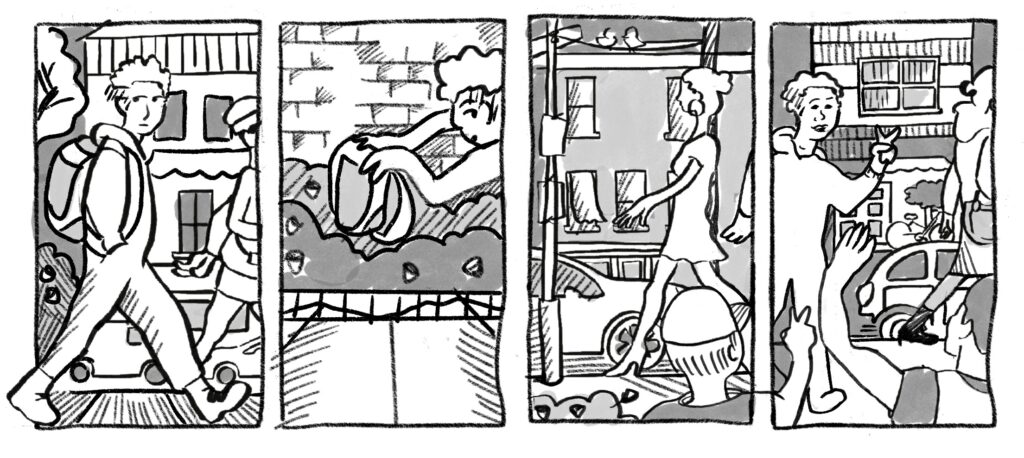
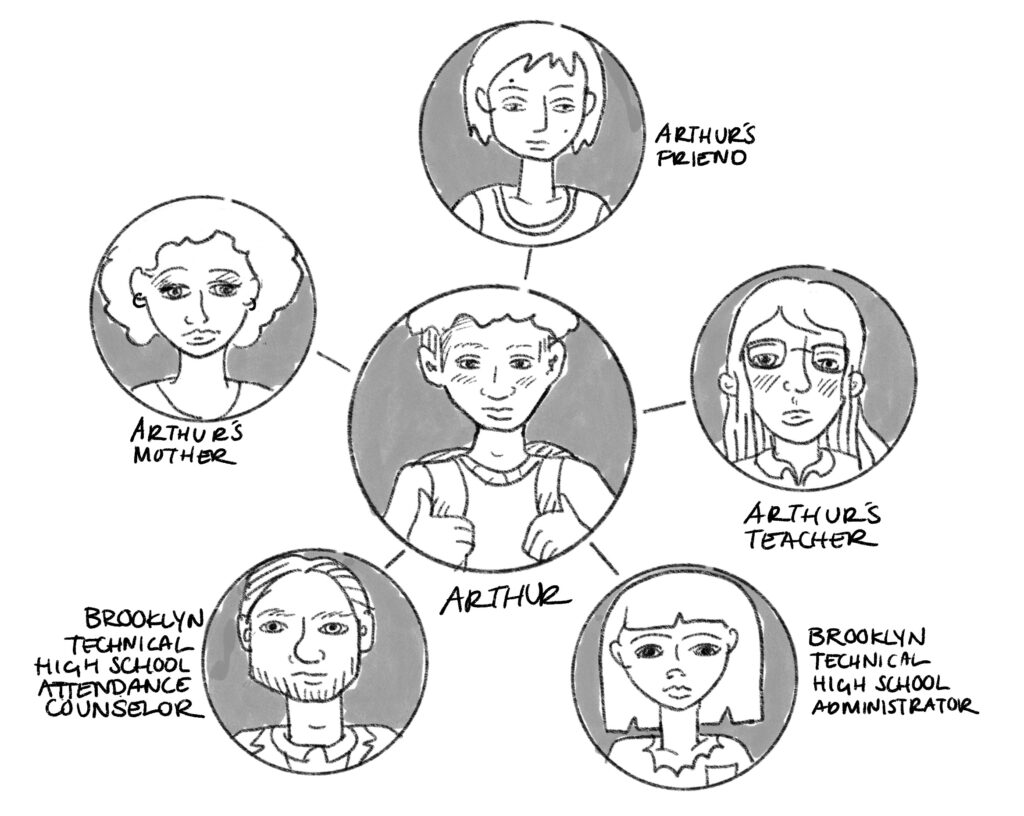
A student’s decision to skip school can be a personal choice, though it may be influenced by these broader issues. Arthur, who is a senior at Brooklyn Technical High School, decides whether to skip school depending on his mood that day, if he’s had a rough morning or a good start. Arthur’s home life is turbulent, and his capacity to commit to school is affected on a day-to-day basis. He and his siblings are being raised by their single mother, who is Hispanic. Arthur says she prioritizes education because it is a deeply rooted cultural value that is considered key to success and which honors family sacrifices. Accordingly, he says his mother disapproves of his skipping school and slacking off, and is always encouraging him to apply himself wholeheartedly.
Atalya Sternoff works at Brooklyn Waldorf School, a private school where she teaches second grade. She says reasons for absences are a little different for private schools than for public. “Especially the private schools, it’s just the family’s personal decision,” she says, “like deciding to take vacations [or extend] vacations.” However, as demonstrated in the above chart, students with higher socioeconomic status consistently attend school at a rate significantly higher than those living in poverty.
Data published on the NYC Public School InfoHub shows that students in temporary housing (STH) consistently have the highest average chronic absentee rate. This is in part due to transportation reasons, where students who are relocated to temporary housing face longer commutes to the schools they were previously attending. For homeless STH, bullying, lack of specialized support, and logistical hurdles of living in shelters frequently prevent students from attending school. Students with disabilities (SWD) living in temporary housing often lack the extra support needed to succeed academically.
Since Arthur’s mom lost her job, he and his family were evicted from their apartment and spread out across the city to secure housing. Arthur has been taken in by a classmate’s family who fortunately live walking distance from the school. In this case, his STH status does not directly affect the logistics of his commute or capacity to attend class. But for many of the 150,000 or more students in temporary housing, relocation is a determining obstacle.
Rather than criminal penalties, the repercussions for chronic absenteeism are typically administrative and focused on identifying barriers to attendance. Caretakers of students at risk of chronic absenteeism may be called to administrative attendance hearings and Attendance Counselors, like Maldonado, are deployed to conduct home visits and interventions with families for students who are chronically absent.
“You have teachers and then you have administrators that work with students and with families,” explained Jack Fairbairn, a DoE Teaching Fellow who has taught in several public schools across the city. “I think it really comes down to them. The schools where I’ve seen really good attendance rates have had really ‘on it’ admin who are very involved.”
Enforcement and discipline is an important part of boosting attendance but it is also evident that measures implemented are not evenly distributed across public schools. Brooklyn Technological High School in downtown Brooklyn, where Arthur is a senior, currently has a student body of 5,808, making it hard for teachers and staff to administer repercussions effectively and students at risk often go unnoticed.
As an alternative to punishment, positive reinforcement for students who attend school could be more effective. At Origins High School, where Judith Silfrene worked previously as a special education teacher, “There was chronic absenteeism and the school came up with several strategies to increase attendance, including incentives such as a PS5, a flat screen TV, and other major electronics.” She said, “They also conducted perfect attendance trips each trimester to really cool places such as Medieval Times Dinner and Theater.” Jack Fairbairn emphasized that whether incentives are material or social, “If [students] have buy-in, they’ll be there.”
Damian Maldonado, attendance counselor at Newark, New Jersey’s Board of Education, facilitates interventions with families and students. These interventions typically involve “building things like motivation, enrichment, incentives…and a system where students can hold each other accountable.” In one case with a family, Maldonado says “It wasn’t until we tried to center the conversations around them and help them understand the importance of [attendance] for their kids that they really started to kind of get the program.” It’s a working balance. “I just want to make sure that the kids feel happy that they’ve accomplished coming to school every day, whether for a month or for a week, but also being able to address and understand why they aren’t coming to school — because that’s more important than anything.”
__
Datasets provided by NYC Public Schools InfoHub and NYC OpenData, among older archives of legally mandated attendance records, are used as a metric to grade schools, identify areas of need, and uphold accountability to the system’s stakeholders; the students. Attendance is also part of the DOE school “progress reports” and evaluations, among other local, state, and federal monitoring. This data also helps policymakers propose new policies, early warnings and interventions, or indicators, like the Attendance Index, to better address diagnosed issues.
“Attendance data is the most important role of my job,” said Maldonado. “We need that data to really recognize patterns and trends.” Equally important is his own day-to-day data that can’t necessarily be captured by larger-scale monitoring. Maldonado says his data about the school, its students and their families, is “muscle memory” that can be helpful to track individual cases. “If you knew a student within this year and what they were going through,” Maldonado says, he can then reflect on, “how it compares now that they are out of the situation.” For example, he says can note a specific day “where it was disclosed that the student lost a family member, and I’m able to track that since that incident, they may have missed like five or ten extra days that would stem from that overall reason.” He says “It’s all being able to communicate with families, know what’s going on to the best of your ability.”
__
“Fundamental to receiving a quality education is the ability for New York City public school kids to have a roof over their head and the direct support they need to focus in the classroom.”
— Zohran Mamdani, while on his campaign trail, advocated for the expansion of a program which pairs students in shelters with school staffers for daily check-ins.
Although mayor Zohran Mamdani has not made any explicit policy decisions, he addressed the city’s most vulnerable student population directly in his goals for the new administration with plans to expand an initiative matching school staff with homeless students and their families for weekly check-ins. Jennifer Pringle, director of Advocates For Children’s Learners in Temporary Housing Project, emphasized that “Education is the best tool we have to prevent future homelessness, and only bold leadership from City Hall can bring the urgency and coordination needed.” Schools Chancellor Kamar Samuel backed up the new administration’s plans to “prioritize trauma-informed, cross-agency, and data-driven strategies to address chronic absenteeism and boost educational outcomes for students in temporary housing.”
EdTrust-New York agrees that improving the school climate is critical, “expansion of restorative justice programs, and training educators in trauma-informed and healing-centered practices,” the organization supports renewing mayoral control of city schools. It also suggests “more accountability to families and students…giving students voting power on education councils and publicly reporting how parent and caregiver feedback drives policy.”
In January of this year, Mamdani reversed a campaign promise to rescind his mayoral control, which was scheduled to expire in June. After a deeper reckoning with the challenges he has inherited, he expressed his realization that New Yorkers should direct their concerns to him. In his inauguration speech, he committed to working toward a version of mayoral control that will “engage parents, teachers, and students in decision-making.”
Students and families are facing challenges from all directions. Across the city, administrators and teachers in the public school system are doing their best to uplift students like Arthur, encourage them to maintain attendance, and provide support for the families behind them. “Those families deserve a fair chance,” says Maldonado, ”and a fair shot in a school that’s willing to defend them amidst everything going on.”
__