Those Who Stay: Africa’s Post-Aid After Life

James Jamu
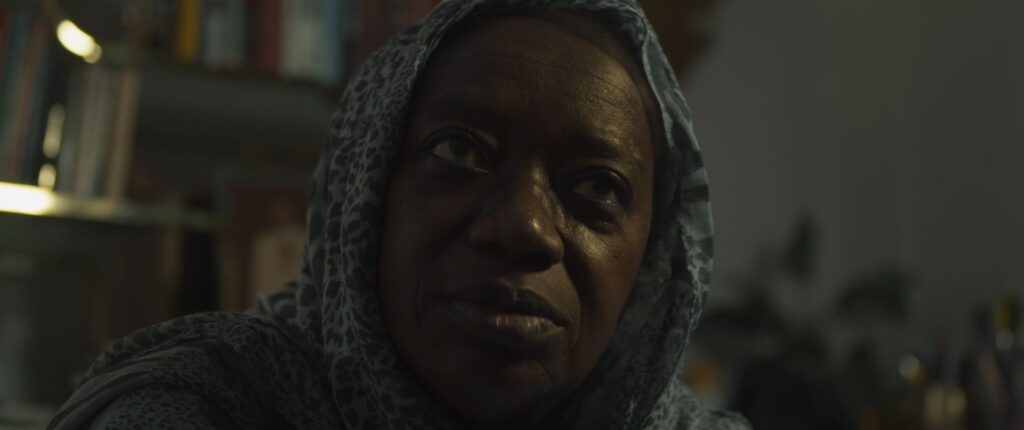
Malado Barro’s eyes wandered fondly over the images on her phone, replaying videos of her home and family compound shared by her younger cousin in Bamako, Mali, on WhatsApp. The bungalow’s facade was painted light blue, with grey tiles and white paint applied as finishes to the veranda. A second-hand white Toyota Tacoma imported from the US was parked right next to her home.
For the last 10 years, the 61-year-old has diligently invested in a life after America. “I can’t call a place home if I am unable to have my own land or property.” Said Barro, recounting her experience living in the country for the last 30 years of her life. Barro moved to the country in 1997 to pursue graduate studies in Agriculture at Louisiana State University. She had ambitions of working in aquaculture, but has since found herself working various jobs in New York. She currently works as a freelance interpreter for local non-profit organizations and legal clinics, including African Communities Together.
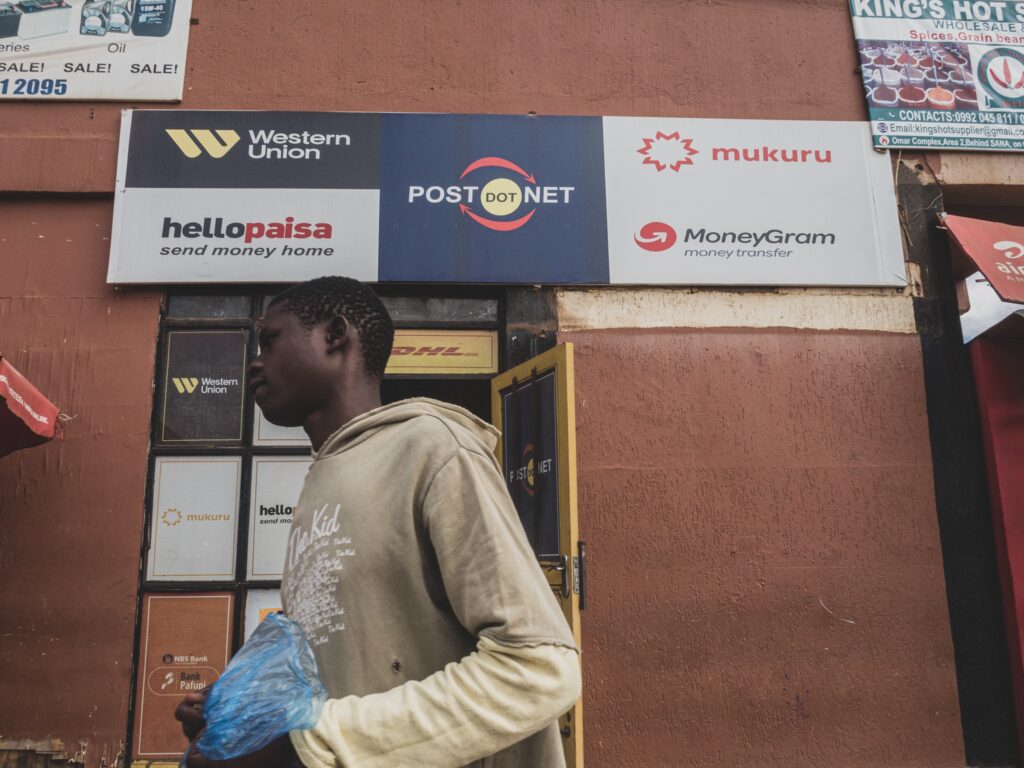
According to Barro, the construction of her home cost approximately 30,000 US dollars. A 3-bedroom apartment in Manhattan costs 50 times more, with a market value average of 1.5 million US dollars. Remittances, funds sent home by citizens overseas, have become a primary source of not only housing projects but also a lifeline for Sub-Saharan nations. Mali alone received over 1.05 billion dollars in 2023, accounting for 5.52 percent of its GDP.
While the country yields significantly more revenue from its gold and minerals exports, migrant labour from Sub-Saharan Africa to the US has tripled from 691,000 in 2000 to over 2.5 million in 2024(*), exposing an increasingly complex co-dependent labour system, one in which African economies are sustained not only by what they produce within their borders, but by the wages their citizens earn abroad. In this current global order, migration functions as an informal export industry: workers leave, but their income returns, circulates through households to fund construction, education, and daily consumption. Unlike gold or oil, remittances do not pass through state institutions before reaching citizens. They move directly from worker to family.
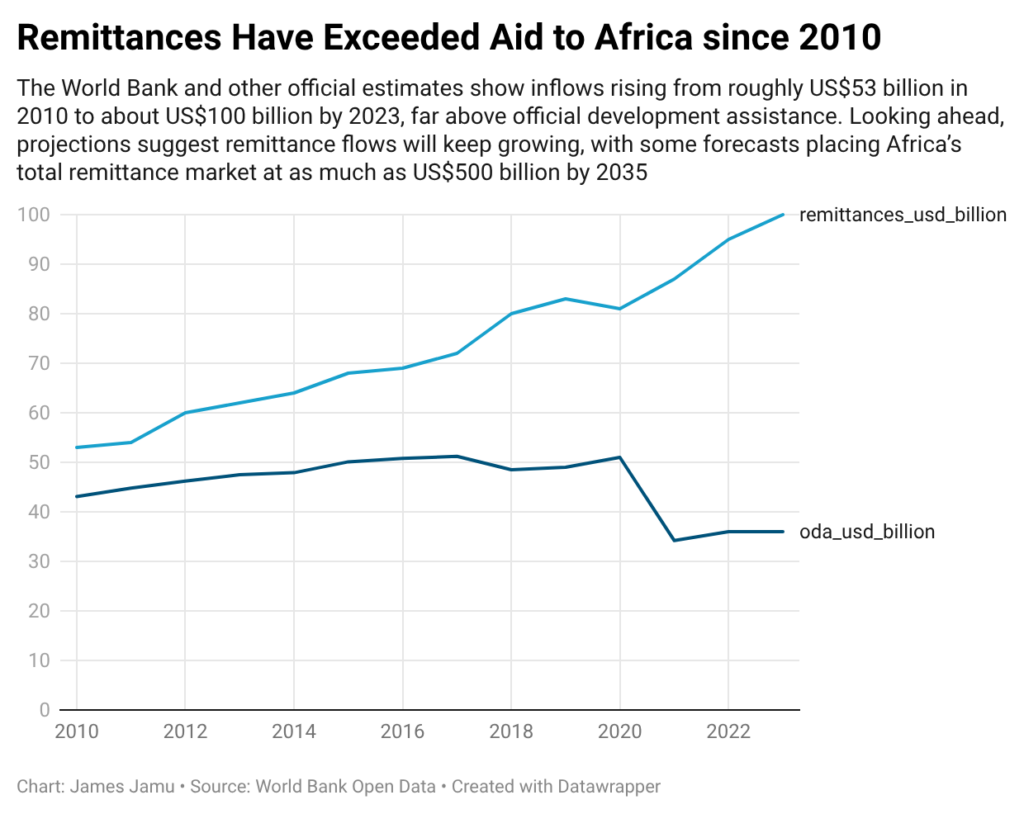
Remittances have outpaced aid to Africa since at least 2010, and the gap has only widened. The World Bank and other official estimates show inflows rising from roughly US$53 billion in 2010 to about US$100 billion by 2023, far above official development assistance. Looking ahead, projections suggest remittance flows will keep growing, with some forecasts placing Africa’s total remittance market at as much as US$500 billion by 2035 if transfer costs decline. Following the funding cuts instituted by the US government in 2025, the dependence of developing countries on remittances has only intensified.
Mali remittances (2023)
$1.05B
5.52% of GDP
Sub-Saharan migrants in US
2.5M
Tripled since 2000
Remittances vs aid (2023)
$100B
vs ~$35B official aid
Remittance Taxes
That vulnerability is compounded by legislative proposals that would directly tax the money migrants send home. In July 2025, Congressional Republicans proposed a 5 percent excise tax on international money transfers as part of a broader budget reconciliation package. In 2026, a 1% tax was applied only to remittances funded by cash, money orders, cashier’s checks, or similar physical instruments. The latest public data estimates suggest the U.S. Treasury could collect about $10 billion over 10 years from the 1% remittance tax
Advocates for diaspora communities have pushed back forcefully, arguing that remittances are not foreign aid or investment flows but private income transfers between family members. “As Africans, we all know that the responsibility to support family back home is assumed,” said Muhammad Musah, a community organizer at African Communities Together, where Barro occasionally interprets. For migrants already navigating housing insecurity, low wages, and an increasingly hostile political environment, the tax signals something beyond its dollar value; it shows that the financial thread connecting them to home is no longer treated as untouchable. Its introduction reflects a political climate increasingly hostile to the very financial lifelines that have quietly sustained entire economies, and quietly funded, brick by brick, the homes that people like Barro are building for the lives they intend to return to.
Home Owner Ideology
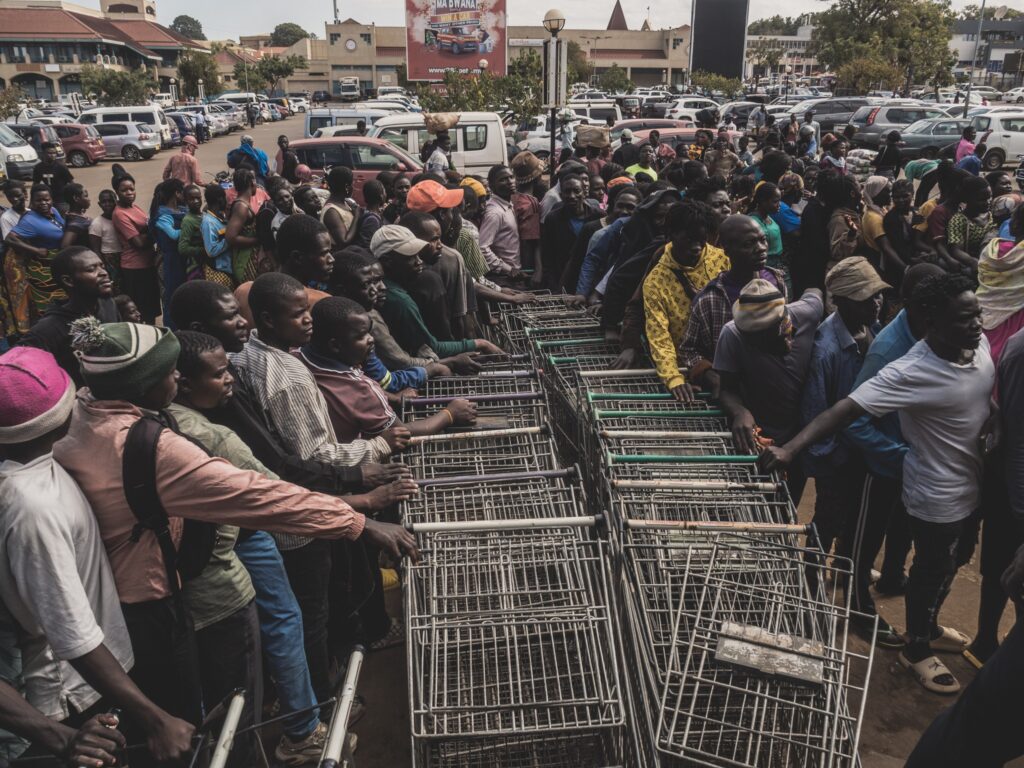
The stability of households in numerous major African cities, such as Bamako, is tied to the stability of low-wage, often insecure work in Western labour hubs, which include New York City. While the country reports one of the lowest unemployment rates on the continent, the median salary is 1500 USD a year(*), positioning the vast majority of the population as severely vulnerable under the United Nations’ Global Multidimensional Poverty Index.
Barro spent 2024 living between homeless shelters with her son, Djibril (25), following a rent hike in Harlem. She has since been living in the East Village as a live-in caregiver. “If I didn’t have this man take me in, I would have been homeless at my age. That is no way to live.” Said Barro, disaffectionately.
Her precarious economic conditions, coupled with the anti-immigration sentiment purported by the Trump administration, have reaffirmed her desire to return home. Dr. Sigumbe Muyeba, associate professor of African Studies at the University of Denver and author of The Homeowner Ideology: Economic (F)Utility of Real Property Rights in Four African Cities (2025), says that the desire to build a home and a new life after spending years abroad is not a new phenomenon amongst Africans. “The current wave of anti-immigration sentiment has only accelerated the push to do so.” Said Muyeba, who argues that homeownership has real symbolic and security value, especially for poorer households. He is skeptical of the assumption that owning property is an automatic vehicle toward wealth for everyone, including diaspora buyers who seek to move back. “What I have found in my research is that the properties can be valuable as shelter, status, or a store of wealth, but it becomes idle capital.”
Idle capital refers to assets that are not easily converted into income, regularly used, or quickly sold when needed. For homeowners like Soulama, the property often sits outside the owner’s day-to-day economic life and is not always turned into income. It may be used only occasionally, left empty for long stretches, or built in a market where rental demand is weak, maintenance is costly, resale is slow, and legal/title issues make it hard to leverage or liquidate. A permanent move home could mean completely losing or significantly limiting avenues to make money.
War and Travel Bans
Malado Barro, a green card holder, has 3 years until she can qualify for citizenship, but the risk of going back too soon could jeopardise her chances. Mali’s deepening instability has complicated the long-held dream of return for many migrants abroad. Relations between the Western African country and the United States have soured, resulting in a full travel ban. Mali has been engulfed in a prolonged security crisis, with jihadist insurgencies spreading from the north of the country and a military junta, which seized power in 2021. In 2024, the junta expelled French forces and deepened its alignment with Russian private military contractors, accelerating Mali’s diplomatic isolation. Following the departure of French and UN forces, Wagner mercenaries were hired to aid the Malian military (FAMa) in counterterrorism efforts, with roughly 800-1,000 personnel employed by the Kremlin-backed group known as Africa Corps.
The conflict escalated sharply in April 2026 after coordinated attacks by the al-Qaeda-linked group JNIM and Tuareg separatist fighters from the Azawad Liberation Front (FLA). Military bases were overrun in northern Mali and the attacks spread toward Bamako. Mali’s Defence Minister Sadio Camara was killed after militants targeted his compound near the capital.
Mali is now part of the Alliance of Sahel States (AES), a regional bloc formed with neighboring Burkina Faso and Niger following tensions with ECOWAS and Western governments. The alliance positions itself as a self-reliant security partnership against jihadist violence, but worsening attacks and political uncertainty have raised fears about the region’s long-term stability. As it stands, all countries in the alliance have a full travel ban from the United States.
For migrants in the United States and Europe, the deteriorating security situation has collided with tightening immigration policies and travel restrictions, making the prospect of return increasingly uncertain. What was once imagined as a temporary migration is increasingly tilting towards becoming a permanent exile.
For migrants whose family compounds sit outside Bamako, in towns and villages closer to the conflict zones, a visit home is no longer a sentimental journey but a calculated risk. The junta’s hostility toward Western nations has also introduced uncertainty around documentation, residency rights, and the legal standing of property owned by citizens abroad, adding yet another layer of instability to investments made in good faith over decades. A generation of Africans who built their retirement plans around a piece of land back home, the question is no longer simply whether that investment will pay off economically. It is whether they will ever be able to return to it at all.