Florida’s Book Bans Barrel Towards A First Amendment Crisis

Since gaining national prominence at the beginning of the decade, the fight over Florida’s book bans has continued to churn on in the background. Today, a broad coalition of stakeholders is pushing back against the sunshine state’s book bans in a variety of ways.
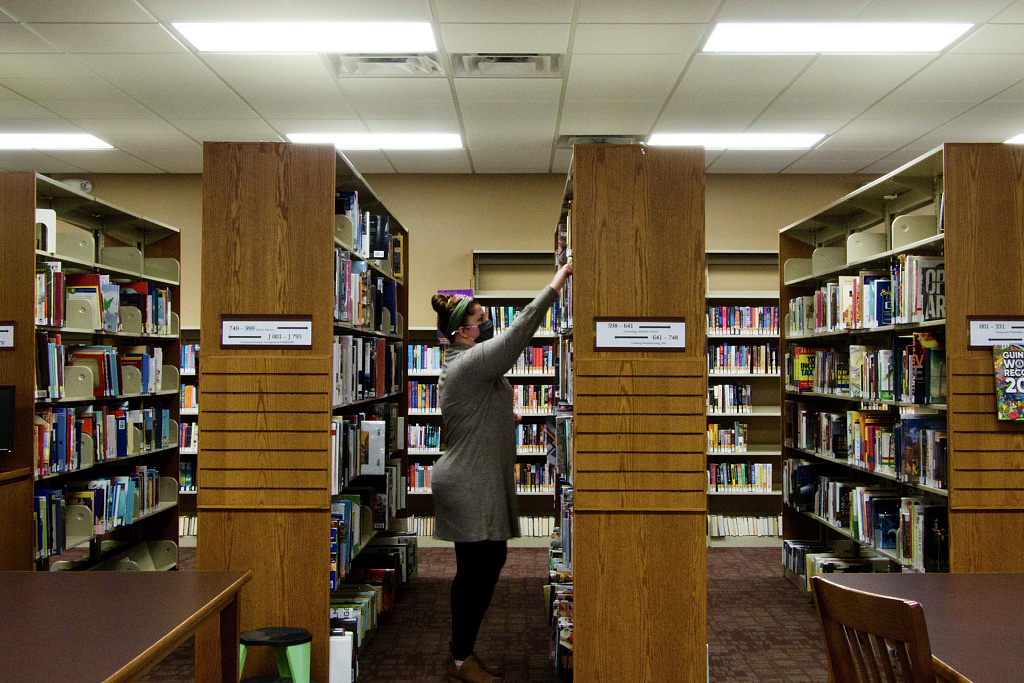
Since the beginning of the decade, America’s public schools have been at the center of the country’s explosive culture wars. No other state has exemplified this phenomenon quite like Florida. The Sunshine State’s education politics have grown particularly volatile as the state’s ultra-conservative government clashes with liberal enclaves across the peninsula.
For many Floridians, the state’s pivot to becoming a conservative laboratory has been a jarring pivot that clashes with the state’s more libertine history. However for a student like Jack Hayes, the divisive politics has been fairly normal. Hayes could recall the chaotic scenes at school board meetings fairly early in his academic journey.
“I do remember, like, the first one that I went to, there were people with signs, and growing up, I used to watch a lot of professional wrestling.” Hayes recalled during an interview. “And it reminded me a lot of that, where they had those, like, neon signs with, like, Sharpie on them, and it was all just for the mask mandate stuff, and I’m like, dude, like, what’s everybody doing here?”
Hayes and his family were at the forefront of these pandemic era politics. His mother, Judi Hayes, was plaintiff in a lawsuit against Governor Ron DeSantis after his ban on mask mandates prevented Jack’s younger brother Todd from returning to in-person schooling in 2021. Therefore, it should be no surprise that Jack became a student plaintiff in another lawsuit targeting an alternate branching path of the Governor’s education policy—book bans.
The Hayes are a part of a broader network seeking to counteract the ideologically motivated attacks on the public school system. Parents, teachers, students, and even corporate publishers of banned books have taken the fight to Florida’s conservative movement in a variety of venues. While some have gone to court to fight Governor DeSantis, others strive to provide a proper accounting of books taken off the shelf in Florida. These fights are not just taking place in Florida. As other states follow Gov. DeSantis’s model, a Supreme Court fight over the role the government plays in shaping public schools, and libraries, is brewing.
Gender Queer: A Memoir by Maia Kobabe was one of the first books targeted by conservatives in Orange County during the fall of 2021. While Orange County ultimately returned the graphic novel to high school shelves, the stage had been set for a top-down approach to book bans from the state’s capitol.
Seeking to build on the “parental rights” rhetoric that propelled Glenn Youngkin to Virginia’s Governor’s office in 2021, Governor Ron DeSantis worked with Florida’s G.O.P super majority in Florida’s state legislature to pass a variety of education-related bills leading up to the 2022 midterm elections. The Governor’s culture war agenda paired nicely with the G.O.P’s efforts to expand voucher programs for the state’s burgeoning private school sector. As a whole, the Governor staked his future presidential ambitions on a conservative education policy blitz.
These bills fueled national discourse with provocative names and bold ambition. The legislative onslaught began with The Parental Rights In Education Act. Better known to the broader public as the “Don’t Say Gay Act,” the law banned the discussion of sexual orientation and gender identity in K-3 classrooms. The Florida Board of Education expanded The Parental Rights In Education Act to include all K-12 public schools, but LGBTQ+ advocates secured a victory through a legal settlement in 2024 with the state by explicitly defining the boundaries of what teachers are allowed to discuss in the classroom.
Jack Hayes was one of many students who felt the consequences of Gov. DeSantis’s education agenda. Jack had been eager to take AP Psychology with a specific teacher at his high school, but those plans were upended when then-Education Commissioner Manny Diaz effectively banned the massively popular class due to two units on gender and sexuality.
After a substantial amount of push back from parents and students, Commissioner Diaz and the Florida Department of Education reversed course, but the damage had already been done. Orange County declined to teach the class during the 2023-2024 school year, and Jack’s preferred teacher chose to retire before he could take the class.
As the Florida Legislature continued to reshape the public education system in a conservative image, citizens of the state continued to organize against Florida’s ascendant conservative movement.
When conversations around removing books in Orange County’s libraries began in 2021, both of Stephana Ferrell’s children were in elementary school. In just a year, Stephana would be at the forefront of an effort to catalog the rapidly growing amount of books removed from Florida’s public school libraries.
These efforts would culminate in the formation of the Florida Freedom To Read Project. Stephana co-founded the group with other parents to strike back against a narrative that had been dominated by conservative groups like Moms For Liberty. Stephana spoke about the goals of the organization, “We wanted to use the public records process to really show how policy was actually impacting what was and no longer available in our school libraries, to get an accurate account of exactly the impacts that these policies were having, because, again, there was such a control on media down here, and the narrative that the state was putting out.”
Stephana was joined in her efforts by allies across the nation. Tasslyn Magnusson was one of these allies, but she did not intend to be a prominent voice in the fight against censorship in the United States. By trade, she was a published author with a PhD in history from Case Western Reserve University. Her efforts to track the banning of books began in earnest on social media. “I was hanging out on Twitter, as, like, all unemployed authors seem to do, and people started talking about book bans, and that it was getting worse, and they were being banned more often.”
Magnusson’s efforts would begin with a simple spreadsheet posted on her Twitter. It would not take long for her to be inundated with tips from librarians and teachers. Eventually, PEN America offered Magnusson the opportunity to create a database for all the book bans that could possibly be verified. This list would be called PEN America’s index of book bans, and the organization has released a report every year since 2021 (4 total).
“ Like, everything that we do is an under count.”
-Tasslyn Magnusson
PEN America’s involvement allowed Magnusson to expand her original list, and it provided the opportunity for her to connect with local advocacy groups against book bans like Stephana and Florida Freedom to Read. This would prove immensely useful as Magnusson and PEN America sought to verify the reports of book banning across the country.
Pen America defines a book ban as “any action taken against a book based on its content and as a result of parent or community challenges, administrative decisions, or in response to direct or threatened action by governmental officials, that leads to a book being either completely removed from availability to students, or where access to a book is restricted or diminished.”
According to Magnusson, PEN America will only count a book ban if it can attach the allegation to publicly verifiable information. This allows the PEN America index to be as accurate as possible, but the downside is that the list often finds itself playing catch up when a deluge of information from a local actor. Due to this, Magnusson believes that PEN America, and other book ban tracking organizations, may be unable to demonstrate the full extent of book bans in the United States, or as she simply stated “ Like, everything that we do is an under count.”
Regardless, the work of Magnusson and PEN America help to understand the scale of book bans in the state of Florida. It also helps us understand how book banning works in the state of Florida, and the state does not ban books equally. The two most banned authors in the state help illustrate this.
During the 2025-2026 school year, Stephen King and Sarah J. Maas. King leads the count with 157 books banned in the state while Maas follows with 77 books. King’s sizable lead highlights the rapid pace with which certain counties will pursue book bans compared to other states.
Two counties account for 135 of Stephen King’s books being banned: Union County School district and Hillsborough County School district. Meanwhile, Sarah J Maas has had at least one of her books banned in 13 of Florida’s school districts. Interestingly enough, Union and Hillsborough county also led Mass’s count with the two counties banning 27 books between them.
This highlights a grim reality of Florida’s book bans. While most school districts do end up banning books, not all Floridian school districts ban books equally. The state has created a system that will exacerbate disparities in literacy at a time when the state of Florida has already struggled in the post-covid era. This was a poor system designed by the state legislature, and Florida has spent a considerable amount of time, energy, and monetary resources defending it in court.
By 2022, the state legislature had begun to pass a variety of legislation that would enable censorship at the county level in Florida. First there was HB 1467. Stephana referred to this bill as the “Book Ban Bill” because of the way it drastically enabled counties to remove books from their school’s shelf. Primarily, the bill allowed anyone within the community to object to a book being within a library or classroom, and it also required every single book within the school to be approved by an accredited specialist.
The former expanded the book removal process to allow a small minority of Floridians to ban a vast amount of books. Meanwhile, the latter exacerbated a bureaucratic bottleneck that would force counties to simply remove books all together as they waited for approval to allow the book back within the school’s collection.
The expansion of the approval process to include classroom libraries was a direct result of Florida’s Board of Education’s rule-making process. Stephana explained why that decision was so detrimental to schools, “they [teacher’s libraries] weren’t organized in any way, they weren’t logged, they were just available on the shelf for when kids had free time, they wanted to go pick up a book, they could read it. Well, now, all of a sudden, the state was requiring that for K-5, these books were cataloged, searchable, and selected for all K-12 had to be selected by a certified media specialist, not just a teacher.”
These new rules went into effect in the middle of the school year. Across the state, district leaders urged teachers to act on the side of caution and remove material that may run counter to the mandates flowing from Tallahassee. The end result was a chaotic environment for teachers, students, and parents.
In Manatee County, teachers began to cover up their libraries with construction paper out of fear that the state, conservative activists, or some combination of the two would scrutinize their collection. Duval County saw a highly published moment when books on Hank Aaron and Roberto Clemente were removed from shelves so Duval could formally approve the books.
Each time a book being pulled drew negative attention from national media, Gov. DeSantis and his allies took the opportunity to scold teachers for taking reasonable steps to avoid scrutiny.
In addition to the “Book Ban Bill,” Florida’s legislature also passed HB 1069. This bill codified The Parental Rights In Education Act’s draconian standards to apply to the entire K-12 system of Florida. In addition, Florida’s Department of Education released guidance urging schools to “err on the side of caution” when determining whether a book contained sexual material.
For Jack Hayes, the state’s new laws meant he was unable to check out a copy of Jack Kerouac’s On The Road for an AP class he was taking. The inability to check out Kerouac’s classic novel pushed Hayes to once again challenge the DeSantis administration in court. This time, the family would be joined by corporate allies.
Prior to 2023, Penguin Random House’s efforts against censorship included donations to pro-speech groups like PEN America and the occasional strongly worded press release to condemn the potential censorship of books put out by the major publisher. The rapid increases of book bans changed the corporation’s strategy.
The end result of Penguin Random House’s deliberations was the formation of the Intellectual Freedom Task Force (ITFTF) which sought to fight censorship through active litigation and persuading legislators to pass legislation protecting books in libraries.
Dan Novak has been at the forefront of the task force’s litigation efforts. Since the formation of the task force, Novak has participated in two lawsuits against the state of Florida. Initially, Penguin Random House centered on the explosive growth of book bans in Escambia County. However, the passage of HB 1069 forced Penguin Random House to re calibrate their efforts.
In an interview, Novak described the thought process behind challenging the state directly.“And now, because of 1069, the state levels. pushing down on them and saying, you can’t have this. So we thought, we really gotta pay attention to liberating the districts that want to do the right thing.” The decision to sue Florida’s state government provided the opportunity for the Hayes to have their day in court along with other plaintiffs. Orlando native author John Green was another plaintiff. 9 of his books were banned in different counties across the state including Paper Towers and Looking for Alaska.
Novak’s litigation extends beyond Florida. The first lawsuit Penguin Random House filed was against the state of Iowa. The Hawkeye state’s legislature passed SF 496, and that law prohibited “sexual content” from K-12 libraries along with banning explicit mention of LGBTQ+ identities in K-6 classrooms. Penguin Random House’s lawsuit is one of 2 filed against the Iowa law. On April 6th, the eighth circuit of appeals overturned a lower court’s injunction in a blow to Iowa ACLU’s similar lawsuit.
Currently, Penguin Random House’s lawsuit against HB 1069 is awaiting the result of an appeal by the state of Florida. Oral arguments for the appeal were held on April 22nd. The state is using a “government speech” argument that outright asserts that the specific content of a library does not fall under first amendment protection because the government is making an editorial decision.
19 other states co-signed an amicus brief supporting the state of Florida’s argument that plaintiffs in the case lack standing based on the first amendment. Conversely, Cornell Law Professor Gautam Hans filed an amicus brief in support of the plaintiffs in this case. In an interview, he spoke on the dangers of broadening the legal definition of government speech.
“The reason I don’t think that’s right is that their Supreme Court has said two things that are, I think, really important to the government speech doctrine. One is that it has to remain very limited, otherwise it’s going to swallow the First Amendment. Basically, the government can always be saying, ‘Oh, well this is government speech, therefore First Amendment rules don’t apply’…second reason why I think that this argument doesn’t work is that the Supreme Court has articulated a three part test as to when something should be considered government speech, and I just don’t think that public libraries or school libraries are part of that.”
Ultimately, Hans believes that the Supreme Court will need to step in at some point to resolve the myriad of legal issues surrounding book bans in the United States. “I think what’s going to happen is that with the amount of litigation on this, on these arguments happening in different circuits, that one of these cases, or some of these cases, are going to the Supreme Court. It’s just a question as to when it might be Gibson, it might be Reynolds, but I think that eventually the Supreme Court is going to have to weigh in.”
Until the Supreme Court steps in, the United States will live under a bifurcated system much like the state of Florida. In some places, students’ access to controversial material will be dependent on their parents’ willingness, or ability, to purchase these books outside of the classroom. In some places, literature will be cherished, and students will retain the right to read any age-appropriate material they can find at their public school libraries.
In other places, literature will be cherished, and students will retain the right to read any age-appropriate material they can find at their public school libraries. Some states are taking proactive steps to ensure that this is a reality. Illinois, California, Oregon, and New Jersey are just some of the states that have passed “Right to Read” legislation. While the legislation varies from state to state, most of these bills enshrine protections for librarians, ensure that material is not removed for explicitly ideological reasons, and assert the right of local communities to curate books in their public libraries and schools.
For Dan Novak, this reality seems untenable. “We can have Democrat libraries or Republican libraries. We can have libraries for Evangelical Christianity or for Judaism, and we can exclude one or the other or both. Like, it’s just it’s such a race to the bottom, if you allow that world.”