This is why the New York City subway is more expensive to build than in other cities.

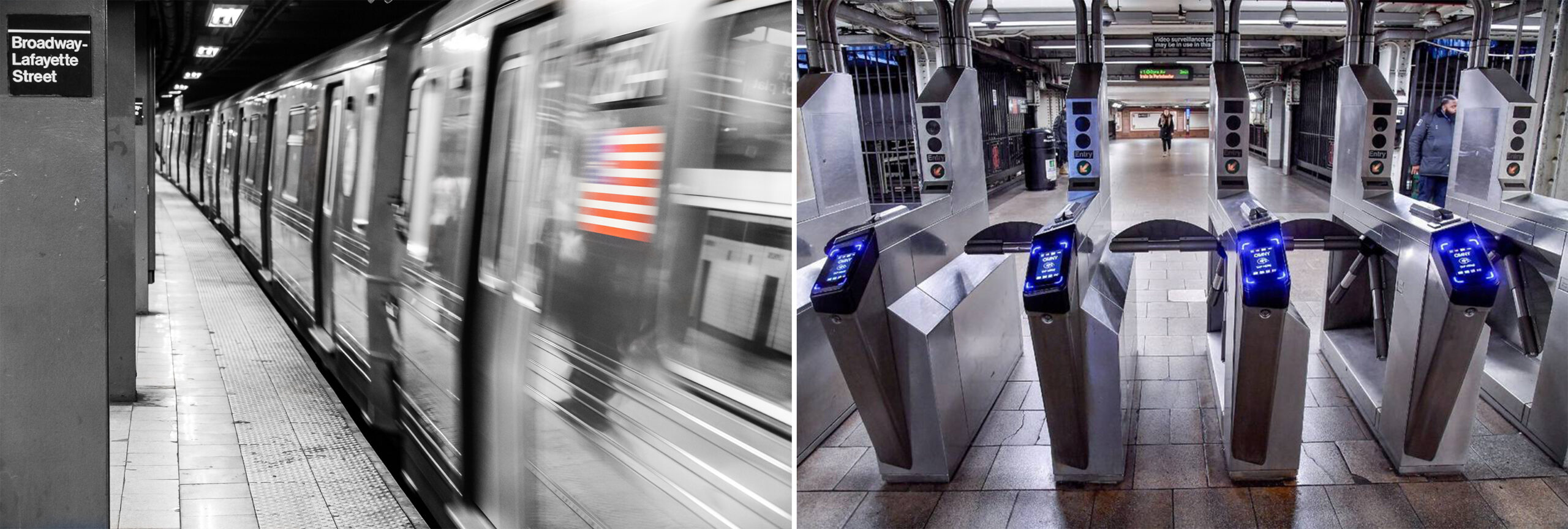
Global train and subway construction cost comparisons
Among all subway and train systems worldwide, the United States stands out for its sky-high rail construction costs and its slow construction speeds. According to 2023 data from the NYU Marron Institute, rail construction costs in the U.S. are ranked 1st globally with an average of USD $1.05 billion per kilometer of track and are commonly ranked one of the slowest countries in track construction speed.
Worldwide, the U.S. only has around 182,000 km of train tracks which pales in comparison to countries like India, that are a third in land area but have 1,184,100 km of track, and China, that are similar in size but has 12,882,300 km of track – most of which have been built in the last 20 years. On top of that, the U.S. currently has no high-speed rail tracks or trains, unlike countries like China (50,000 km) and Japan (3,100 km), which have thousands of km of those specialized tracks.
When focusing on the metro systems in major global metropolitan cities (e.g. New Delhi, Tokyo, Hong Kong, and London) and comparing them to the New York Subway. The MTA has the highest construction costs per km at nearly $2 billion, almost double what it costs to build the London Underground and nearly 29 times more expensive than the New Delhi Metro. Most of the time, train or subway construction projects in New York run into the billions, whereas projects abroad only run into the tens or hundreds of millions.
Within the U.S. metropolitan cities, the New York City Subway have five of the most expensive subway projects in the country, with New York’s East Side Access being over 4 times more expensive than the BART line that links San Francisco to San Jose. In comparison to the rest of the country, the average New York City rail project is 26 times more expensive, with the average construction cost of rail per kilometer in the United States, according to The Eco Center of Transportation, being only at $107 million.
The reasons behind these high construction costs in the United States
- The overbuilding of stations
- The lack of project-to-project knowledge retention
- Labor unions and protections, overstaffing, and high wages
- The MTA builds really slowly
- MTA agencies ruthlessly defend their jurisdiction and budget
1. The overbuilding of stations
A major factor is the overbuilding of stations (larger mezzanines, multiple department offices and teams, etc.). According to the NYU Marron Institute dataset, stations internationally are typically only 2-5% larger than their platforms, whereas US stations are typically 2-2.6 times larger than their platform. These larger concourse and mezzanine spaces come with longer construction and design timelines, increased labor, and therefore, higher cost.
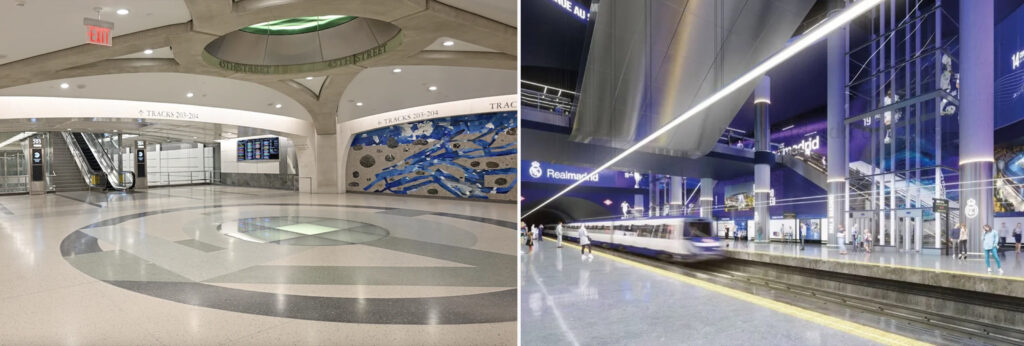
To put this into context, overseas in Spain, the €66 million Santiago Bernabéu metro station in Madrid is nearly 130,000 square feet and equipped with 12 panoramic elevators and 24 escalators. In New York, the Long Island Rail Road (LIRR) mezzanine at Grand Central Madison (also referred to as East Side Access), which cost around $11 billion, is 690,000 square feet with a concourse spanning 6 blocks, is roughly 140-180 feet below ground, and has 22 elevators and 47 escalators. According to the MTA, only 120,000 square feet was built for passenger use and 25,000 square feet for retail space.
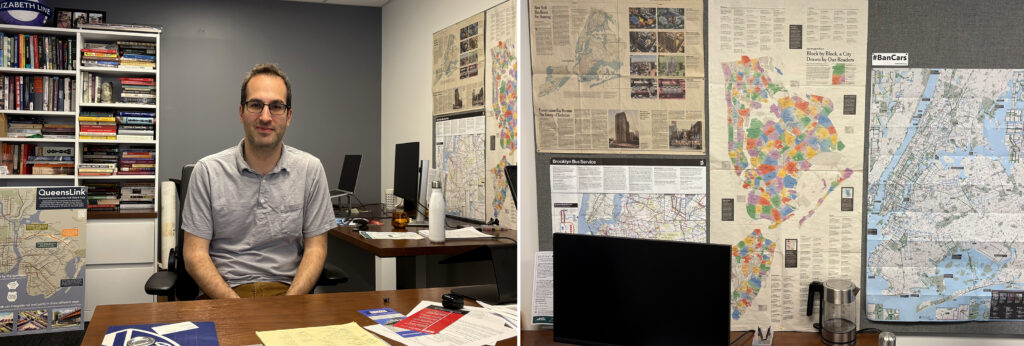
Professor Eric Goldwyn at the NYU Marron Institute said that the design team intended for the LIRR to be in the lower levels of Grand Central, where there are ample platforms and tracks, thereby providing greater accessibility.
However, Goldwyn notes that, “when they presented it to the MTA, the MTA said, you know what, the Long Island Rail Road needs its own ticketing areas, waiting areas, all these things. And so they basically wanted some sort of segregation between the two.”
As a result, designers built an entire station spanning over six blocks underneath Grand Central, which Goldwyn describes as “insane”. He states, “how the two of them (referring to MTA Metro North and LIRR) could not share space is a real failure. It’s a political failure, and it puts us in a position where we had to build something very expensive… And it was very delayed and took a really long time.”
These overbuilds often do not enhance the rider experience or accessibility and offer no tangible or viable way for the MTA to generate increased revenue from the higher price tag. They are typically done to satisfy the wishes of multiple stakeholders and agencies and are often camouflaged by justifying fire safety and greater accessibility.
Another important aspect was that stations in New York and the United States often have large, costly back-of-house spaces (not for passenger use), such as equipment storage rooms, staff changing rooms, and office space.
Concerning the Second Avenue Subway, Goldwyn explains, “The spaces were far beyond the extent of the platform.”
He details the fact that all New York City platforms are usually 600 feet long, but the station dimensions on that line ranged between 1,000 and 1,600 feet long to accommodate all the backroom, service space. Paired with slow construction speeds and high wages, he believes doing large-scale projects (especially underground) increases the financial demands in an unnecessary way.
2. The lack of project-to-project retention knowledge, blueprints, and staff
Another reason stems from the lack of project-to-project retention on construction knowledge or know-how, station and platform blueprints, and skilled staff.
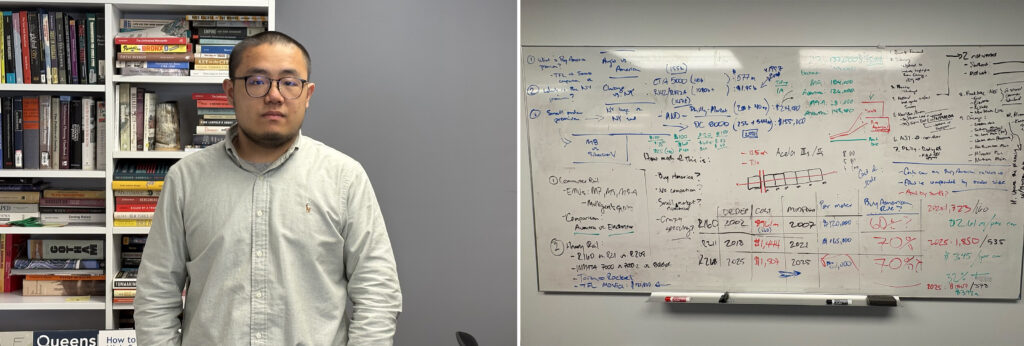
Franklin Tang, an assistant research scholar from Shanghai at the NYU Marron Institute and a contributor to the Transit Costs Project, explains that this issue started when New York City went bankrupt in the 1970s, which caused the MTA to be unable to complete its existing or upcoming construction projects, like the Archer Avenue extension in the 1980s.
As a result, Tang said, “many of the engineers either left public service and went into the private sector, and a lot of the incoming workforce who originally might have wanted to work on rail, went to work in road engineering: highways, road maintenance, and road design. This is because there were steady jobs, good incomes, and high demand across the entire country.”
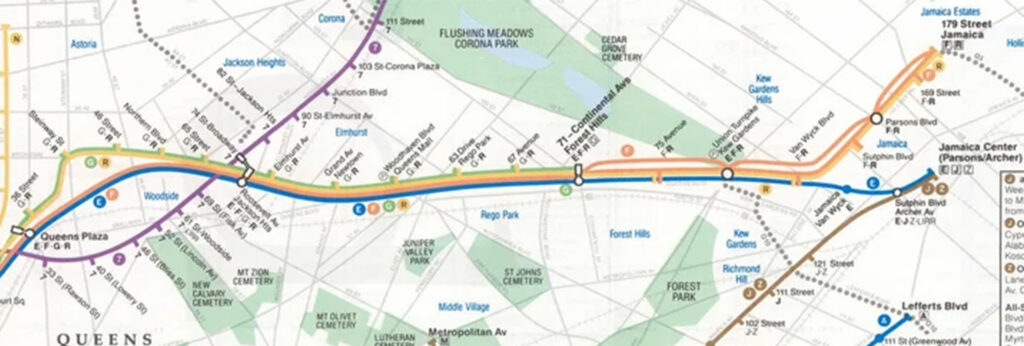
As a result, the MTA started to consistently use short-term contractors for smaller-scale projects, which focused on solving immediate pain points, omitted long-term planning, knowledge retention, design consistency, and the incentive for contractors to work faster.
According to the Conversable Economist, a 40-60% increase in administrative costs due to a lack of standardization and the use of different agencies often leads to production inefficiencies and higher costs.
This strategy is one of the big drivers towards why the MTA’s debt is approaching close to $50 billion in 2026 and is estimated to snowball to $60 billion by 2028.
Metro systems in countries abroad, particularly in Europe and Asia, often have internal engineering and design agencies that retain and pass down knowledge that focus on expanding the network at a predictable and realistic pace while maintaining steady wages and low staff turnover. They would also often find world-class engineers from abroad to train their staff, showcase construction ideas, and share techniques, so it helps local workers and industries achieve world-class results in a short span of time.
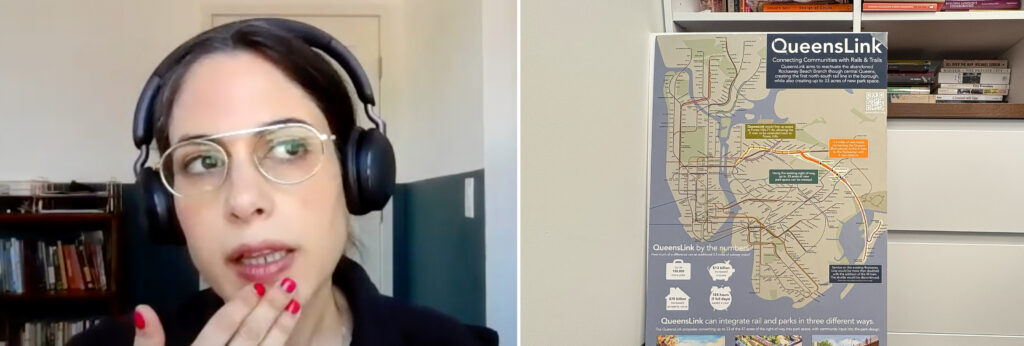
Elif Ensari, a research scholar from Turkey who also works at the NYU Marron Institute, uses Istanbul as an example to explain the effects of long-term construction planning and how they keep project budgets low.
She said, “In Istanbul, there is a pipeline of projects and subways are a (politically) bipartisan investment… Projects are happening all around the city, and contractors want to have government projects on their track record. So they do it for cheaper to make money later.”
This leads to increased competition, with firms all trying to prove that their blueprints, planning, and construction speeds align with the government and its agencies’ expectations for approval of the job. On top of that, Ensari noted that the government makes going over budget a financial and time-consuming hassle.
She explains, “It’s Turkish law that says, if you are working on a government project, you can go over your bid price by 20%, that’s your contingency. If you go above that, you have to go through another permitting process, and then that will take a lot longer. They know that once you go into that process, it will cost you months.”
The large machinery, construction site permits, everything they would have leased, and wages will all be delayed, so contractors do everything they can to avoid that.
Ensari mentioned, “In Turkey, there are very few cases of projects going over that 20% budget contingency… It only happens when there are big changes in design or construction method.”
In New York, consultants, designers, and contractors are unsure of when the next project will occur and whether they will be rehired. Because of this, they have no incentive to build faster. By dragging out construction timelines, hiding behind strong labor unions and protections, and designing oversized stations, they can stay employed for longer.
Ensari elaborated, “Especially with democrats and the abundance movement in the U.S, they are more aware of (the fact that) we try to protect people, we try to do good. But now they are seeing the tradeoffs, which are building very slowly, building very expensively, and being stuck in this gridlock of paperwork. Not being able to do anything.”
3. Labor unions and protections, overstaffing, and high wages
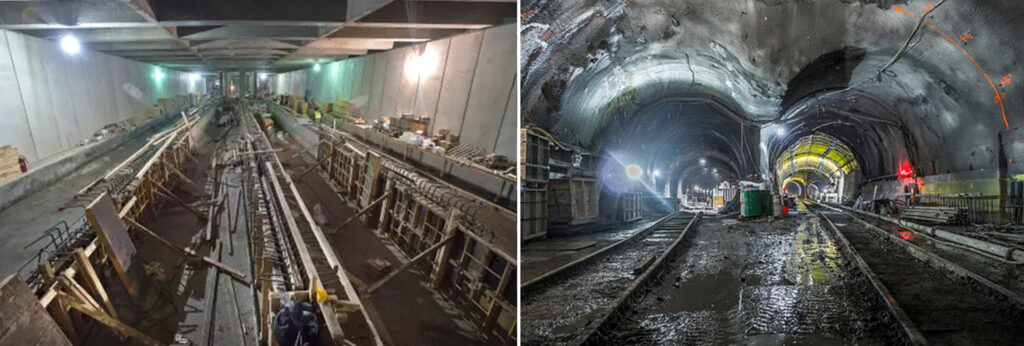
In New York, labor unions and protections for workers are really strong in comparison to the rest of the world. They negotiate with the MTA on wages, benefits, and the minimum number of staff per project.
Unions are often viewed favorably by many as a way to prevent worker exploitation and stand up for employee rights. However, Tang argues that labor unions have no interest in understanding the MTA and its agencies’ concerns when fighting for worker rights and believes that current union protections are outdated.
Tang explains, “A lot of the rules weren’t updated to reflect the changes in technologies that would make it more efficient. For example, one-person train operations in Paris have now moved to full automation. But they kept most of their labor force by reassigning them to be station agents.”
Over the last few years, the MTA has been rolling out newer CBTC trains that have much better signaling technology, and Tang notes that these trains can run themselves just from the push of a button. Yet, New York is still operating subways with more than two cars with two-person crews (an operator and conductor) and has twice introduced a bill (supported by TWU Local 100) to mandate two-person operators to the State Assembly. It was vetoed by Governor Hochul in December 2025 and is now being reintroduced. Tang strongly believes that if this bill is to pass, it would have disastrous consequences for the MTA.
Goldwyn comments, “That’s sort of locking in an anachronistic method of operating trains. Everywhere in the world that has legacy systems is trying to move towards either one-person or fully automated transit operations. And we’re trying to do the exact opposite.”
When it comes to construction, unions also place lots of obstacles that disincentivize further projects.
Goldwyn explains, “If you use a tunnel boring machine in New York, you have to give $400,000 to the union that represents the tunnel workers. It is these sorts of obstacles or taxes that we should be looking to optimize, but I think that it is a big challenge. We are a non-confrontational society when it comes to unions.”
On top of that, Ensari also suggests that union protections can be exploited by workers.
She elaborates, “It’s very inefficient, one person working, three people watching, especially for subway construction, and that’s something we’ve seen.” Ensari then continues by comparing it to Istanbul, “The labor conditions there are not really good, and worker protections are not necessarily like the law, they don’t follow it or abide by it.”
But she believes that a middle ground can be achieved where productivity can be maximized without exploitation.
She points to Europe as a prime example, “If you look at Italy or Sweden, you still see that they can build the same amount of tunnels with much fewer workers and for half the cost. They can do it because they care about both sides.”
Labor costs for these unionized positions often come with generous overtime pay, restrictive union agreements, and premiums on healthcare and other benefits that go directly into the project’s budget. On top of that, specialized units such as New York tunnel workers (also known as sand hogs) operate at much higher rates, sometimes 4 times the cost of their European counterparts.
Tang explains, “For example, with the LIRR, which unions are currently threatening a strike, if an LIRR conductor drives both an electric and diesel train on the same day, they are entitled to double overtime or some sort of massive compensation.”
As a result, this drives up wages in places where costs can be avoided. Tang believes that a modernized union and reallocation of funds are needed to prevent the MTA from falling deeper and deeper into debt.
4. The MTA builds really slowly…
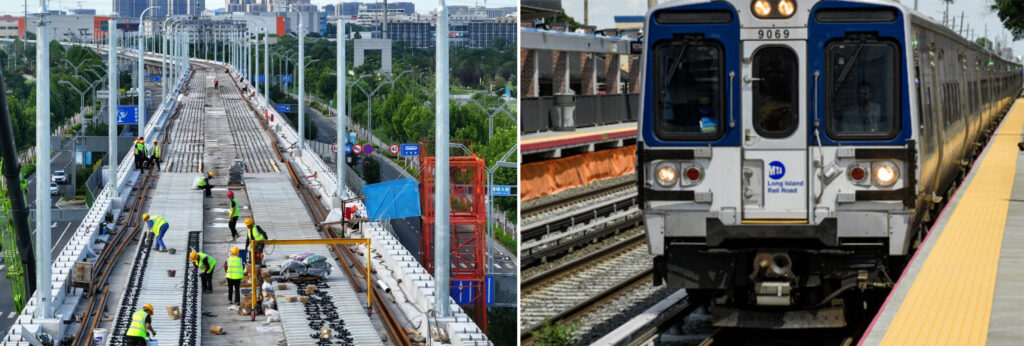
The MTA is notorious for building slowly. For example, Grand Central Madison (part of the East Side Access project) took 15 to 22 years to build, and they have often averaged over a decade for a few kilometers of track. Goldwyn explains the difference between building tracks in New York and in China as an example.
He comments, “The Chinese use pre-casting technology where all of the rail is built and standardized off-site, before it is then dropped into place and connected. We (New York) use what’s known as the cast-in-place technique, where rails are customized and crafted on site before being connected track by track.”
The reason why they still insist on more manual methods, Goldwyn explains, “part of that is about labor protection and part of it is because it has been the standard operating procedure, so I think they are unwilling to change their ways.”
5. MTA agencies ruthlessly defend their jurisdiction and budget
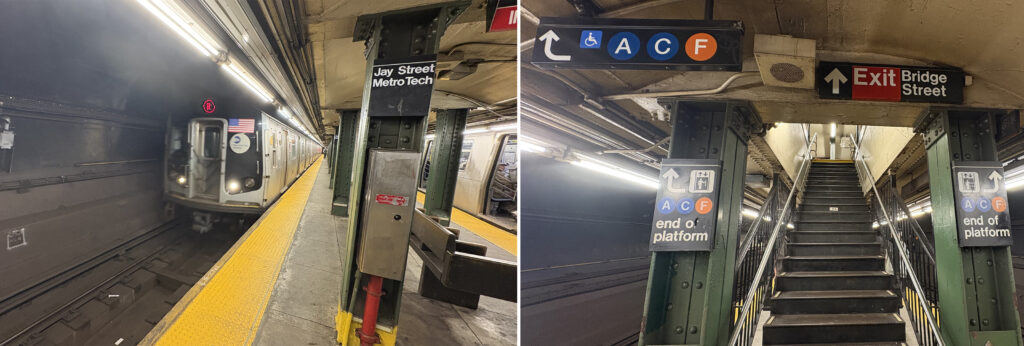
Politics and agency disputes are one of the more unique issues that New York faces when it comes to expanding the MTA network and operations.
As Tang explains, the number of agencies one has to go to and gain approval, where each of them has their own rightful jurisdiction and power, “Rezoning and redevelopment involves so many agencies in the city, you need DCP (Department of City Planning), EDC (Economic Development Corporation), and DDC (Department of Design and Construction). Then, the city-level agencies will need to work with the state-level agencies, such as the DMT (Department of Municipalities and Transport.”
He continues, “I’ve already listed like four different departments, city, and state agencies. Imagine the number of loops you need to go through to build the IBX (Inter Borough Express) and its 18 different stations. Imagine having to go through every agency just to get a project done and then waiting over a dedicated period to complete some track work.“
Goldwyn believes that if costs are to be cut, this needs to change. He said, “They need to come to the table and compromise.”